Academics confronting their family histories: methodological and ethical inquiries
Zeitgeschichte online, August 7th, 2026
>> zum Beitrag in Englisch
[…] The theme of being ‘implicated subjects’ (Michael Rothberg[iv]) with strong attachments to our families’ histories, was, at the end of the workshop again picked up by Alexandra Senfft, who — as the author of an acclaimed family history revolving around her grandfather who had been a high-ranking Nazi official — commented on all presentations. She pointed out that we are all products of our families’ histories: we have grown up with conspicuous silences and taboos as well as lies and stories that we are supposed to believe. We are also faced with conflicting double-bind messages, where one thing is said and the non-verbal communication brings across something else. All participants indeed talked about their forefathers’ involvement in the Nazi project having had sustained repercussions for family life and relationships during and long after the war. All grew up with troubled family histories which had a lasting effect on the next generations. That is why we may be bent on breaking the silence, how hurtful and distressing this may be for us. Senfft indeed suggested that we may be driven to explore these suppressed histories because they have been ‘passed on’ or ‘delegated’ to us as a kind of ‘silent or unspoken assignment’. These realities that we uncover may trigger unpleasant feelings and force us to realize that history hurts…
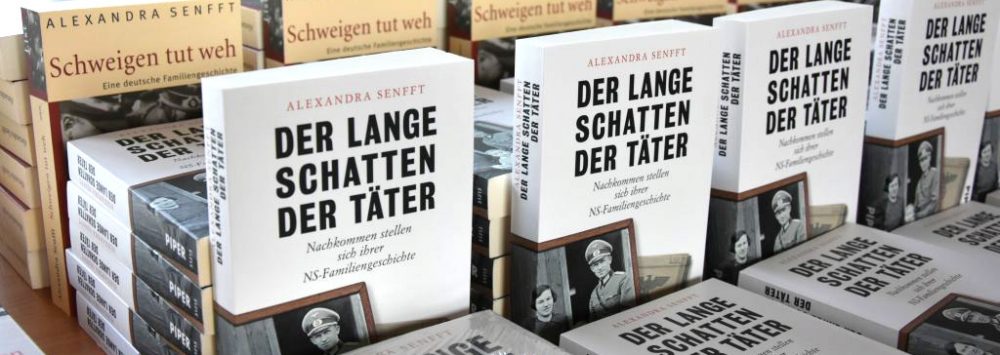
After listening attentively to the stories that had unfolded during the day, Alexandra Senfft commented on all the presentations, sharing her observations and theoretical considerations. She is the author of the highly acclaimed family history Schweigen tut weh: Eine deutsche Familiengeschichte (2007) as well as Der lange Schatten der Täter: Nachkommen stellen sich ihrer NS-Familiengeschichte (2016).[v]In addition, she collaborated with Dan Bar-On, an Israeli psychologist and therapist who initiated and facilitated German-Israeli and Israeli-Palestinian dialogues, encouraging people to share their painful stories and listen to others.[vi] Dialogue in conflict is understood as part of a process of understanding and rapprochement in the spirit of active peace work. Working with him, Alexandra gained much experience in terms of listening to the stories of victims and perpetrators alike. She explained that the transition from monologue to dialogue offers opportunities to move ahead: from solely confronting one’s own history to listening and empathizing with others, sharing and exchanging one’s thoughts and thereby giving them another quality.“