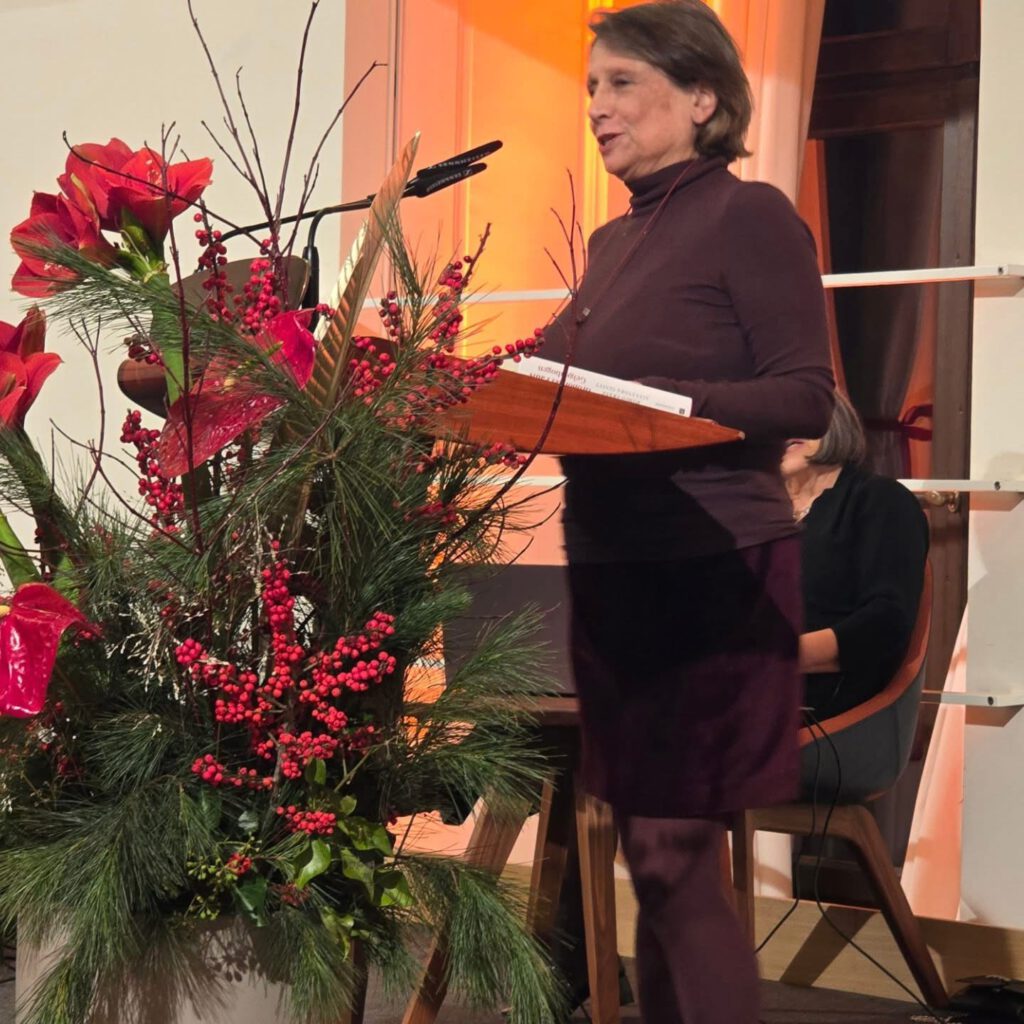
Selbstbehauptung nach Auschwitz

Mein Vortrag „Kontinuitäten des Antiziganismus und gesellschaftlicher Dialog“ im Bayerischen Landtag

Zum Gedenktag an den Auschwitz-Erlass von Heinrich Himmler am 16. Dezember 1942, der zur massiven Deportation deutscher Sinti und Roma führte, hielt ich am 12. Dezember im Bayerischen Landtag das Hauptreferat „Selbstbehauptung nach Auschwitz Kontinuitäten des Antiziganismus und gesellschaftlicher Dialog“.
Engagierte Ansprachen gab es u. a. von Gülseren Demirel (Grüne Bayerischer Landtag), Marian Offmann (SPD-Stadtrat) und Ex-OB München Christian Ude. Beeindruckend auch der Erste Kriminalhauptkommissar Fabian Freese mit seinem Bekenntnis zur Rolle der Polizei in der NS-Zeit und ihrer Verantwortung heute. Organisiert hatte diese beeindruckende Gedenkstunde mit Musik vom Elias Prinz und Nico Franz Quartett das „Madhouse München“. Durch die Moderation führten Madhouse-Chef Alexander Diepold (Vorsitzender der Bundesvereinigung der Sinti und Roma BVSR) und Gaby dos Santos. Als Gäste anwesend waren unter anderem Patricia Koller, Vorsitzende des Behindertenverbands Bayern e. V., und Ernst Grube (Ehrenbürger Münchens und ehem. Präsident der Lagergemeinschaft Dachau). Dank an die Organisator:innen, alle Mitwirkenden und das aufmerksame Publikum für diesen würdevollen und bewegenden Abend!
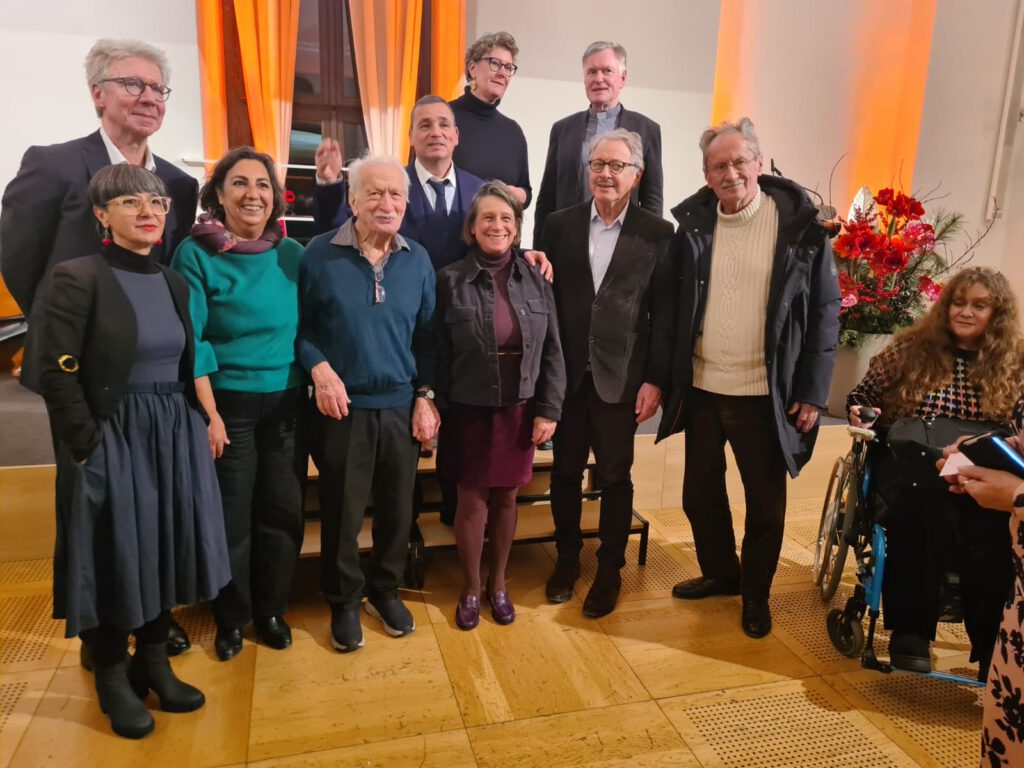
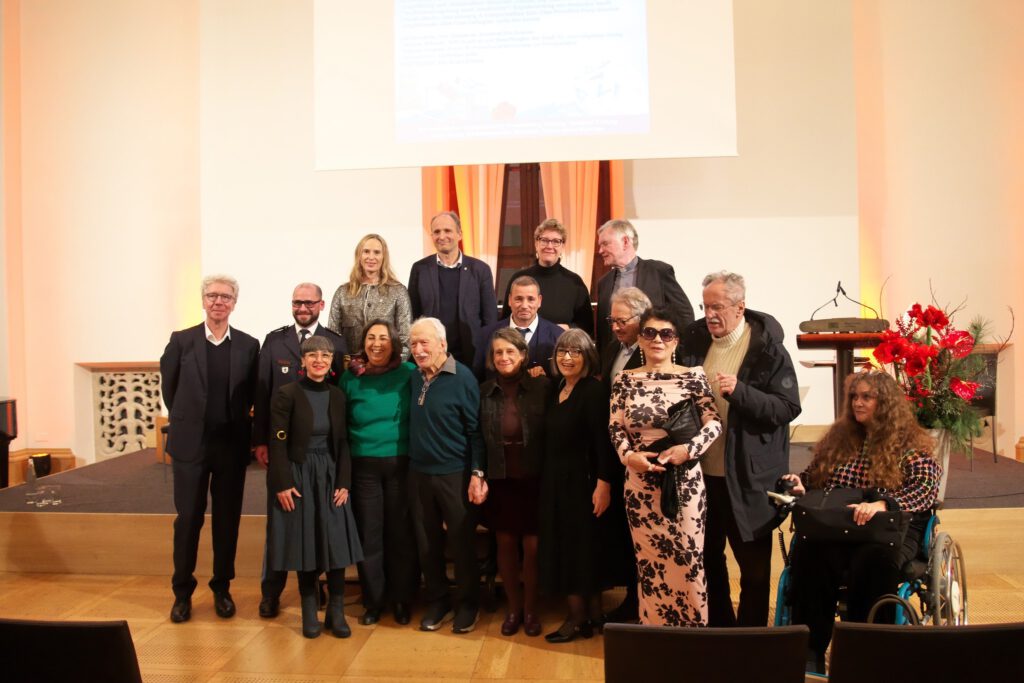
Foto: Oliver Stey

Mare Manuschenge. Sinti and Roma: A century between persecution, resistance and self-empowerment

My talk at Brandeis University, Newton (MA), USA on October, 15th 2024

Romani people have been discriminated against and persecuted ever since their first documented appearance in Europe in the 15th century. Their victimization culminated in the Nazi genocide: Hundreds of thousands of European Sinti and Roma were disenfranchised, detained, tortured, sterilized and murdered. After 1945, the survivors were hardly compensated for their suffering or their human and material losses. Instead, they were again criminalized and are marginalized to this day. Only in 1982 did the German government officially recognize the genocide and its responsibility for the persecution of the largest minority in Europe. Still, Sinti and Roma are treated as second class victims in the commemoration of the Nazi crimes. In spite of the fact that they are a recognized minority in Germany, they are confronted with anti-Romani racism which is deeply engrained in the society, mostly passed on by intergenerational transmissions that are rarely reflected upon.

In her talk, Alexandra Senfft speaks about the persecution and discrimination of the Sinti and Roma, but also highlights their resistance and resilience as well as their self-empowerment. Her material is based on the family history of the German Sinto Romeo Franz. Franz, who identifies as a Prussian Sinto, is a well know musician of Sinti-jazz and was the only German Sinto ever voted into the European parliament. With his music and is civil rights activism, he continues family traditions of culture and resistance which can traced back to Berlin at the beginning of the 20th century.
>> anhören